June 28, 2026 · 3 min read
Case Study: A digitalization project for a municipality
How a municipality in Baden-Württemberg turned a previously paper-based administrative process into a low-barrier, GDPR-compliant web solution.

Tillmann
Founder of TFLIT
Background
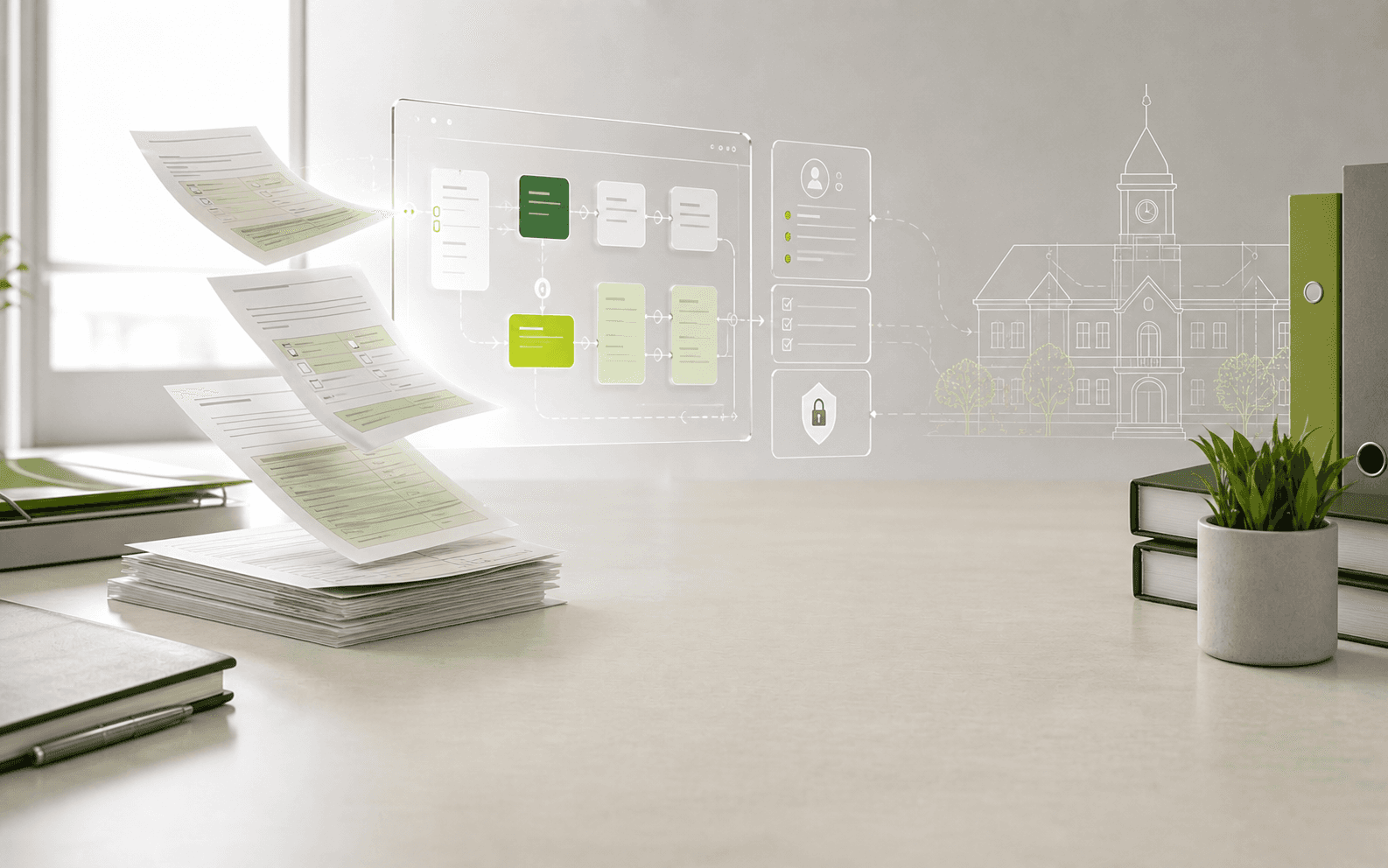
A municipality in Baden-Württemberg ran a recurring administrative process that connects citizens with the administration, until then largely on paper and by hand. Applications arrived by form, letter, or email, were printed out, entered manually by case workers, filed, and passed along across several offices. Follow-up questions were handled by phone, and the status of a case was barely traceable for applicants.
What had worked for a long time came under growing pressure: rising case numbers, citizens' expectation of up-to-date digital services, and the increasing demand for consistently documented, legally sound processing. The administration wanted not merely to digitize the process, but to improve it structurally, without giving up its established responsibilities and approval paths.
Challenge
The requirements were multidimensional from the outset and had to be met together.
- Functional: The real workflow, with its special cases, review steps, and responsibilities, had to be modeled accurately rather than overlaying an idealized process.
- Legal: Data protection under the GDPR was non-negotiable, as was accessibility in line with the BITV requirements, so that the service is usable by as many people as possible.
- Organizational: The solution had to fit into the daily work of the administration, be operable by staff without an IT background, and align with existing routines.
On top of this came the public-sector context: a service offered by the administration must be low-threshold. It must not erect technical hurdles, has to work across different devices, and should also reach those who rarely use digital forms.
Solution
TFLIT developed a tailored web solution that maps the process end to end in digital form, from submission of an application through to completion in case handling. Instead of off-the-shelf software with compromises, the result is an application cut exactly to the municipality's real workflow. It was built in close, iterative coordination with the administration, with short feedback loops and interim versions to try out.
- Guided online form: A clearly structured, step-by-step application that collects only what is genuinely needed, with understandable guidance and plausibility checks that catch input errors early.
- Digital case handling: An internal interface in which incoming cases are bundled, assigned a status, forwarded, and documented traceably, aligned with the administration's responsibilities.
- Low-barrier design: Implementation oriented to the BITV requirements, with keyboard operability, sufficient contrast, and clear, readable language.
- Data protection by design: Data-minimizing collection, a well-considered permissions concept, and a hosting approach attuned to the requirements of the public sector.
- Status transparency: Applicants receive feedback on the receipt and progress of their request, which reduces phone enquiries and relieves the administration.
Outcome
The previously paper- and hand-driven process now runs end to end digitally. Applications arrive structured and complete, case handling no longer requires manual entry and sorting, and the status of a case is traceable at any time. Qualitatively, three things stood out above all: processing became noticeably more even and transparent, the number of follow-up questions fell, and access became more low-threshold for citizens.
- Markedly less manual data-entry effort in case handling.
- More traceable cases compared with the former paper process.
- Fewer enquiries about processing status because status information is available centrally.
It was important throughout that the administration retains sovereignty over the process: responsibilities, approvals, and decision paths remain in the municipality's hands, with the software supporting them rather than replacing them.
Conclusion
The project shows how a classic administrative process can be digitized with manageable effort, without neglecting the requirements of data protection, accessibility, and grown workflows. Decisive here were the close collaboration with the administration and a solution that follows real practice rather than the other way around.
Before publication, approved metrics or a quote from the responsible municipal contact should be added if they may be named publicly.
Frequently asked questions
How does a municipality digitize a paper-based administrative process?+
The proven path is a solution that follows the real workflow rather than the other way around. In this project, that meant a guided online form that collects only what is genuinely needed, plus an internal interface for case handling in which cases are bundled, assigned a status and documented traceably. It was important to model the grown process with its special cases, review steps and responsibilities accurately instead of imposing an idealized workflow. The solution was built in close, iterative coordination with the administration, with short feedback loops and interim versions to try out. That way the municipality remains in charge of its process: responsibilities, approvals and decision paths stay in its hands.
Which legal requirements applied to the municipal web solution?+
Two requirements were non-negotiable from the outset: data protection under the GDPR and accessibility in line with the BITV requirements. In practice this meant data-minimizing collection, a well-considered permissions concept and a hosting approach attuned to the requirements of the public sector. The low-barrier design included keyboard operability, sufficient contrast and clear, readable language, so the service is usable by as many citizens as possible. Neither was added after the fact; both were part of the concept. For public bodies this is the decisive point: planning data protection and accessibility in from the start avoids costly rework and legal risk.
What did digitizing the administrative process actually deliver?+
The previously paper- and hand-driven process now runs end to end digitally, and this shows in three places. Applications arrive structured and complete because plausibility checks catch input errors early; manual entry and sorting in case handling is no longer needed. The status of a case is traceable at any time, which made processing noticeably more even and transparent. And because applicants receive feedback on the receipt and progress of their request, the number of phone enquiries fell, tangibly relieving the administration. Approved metrics will be added as soon as they may be named publicly.
Tillmann · TFLIT
Builds software for companies, universities and the public sector in Baden-Württemberg.